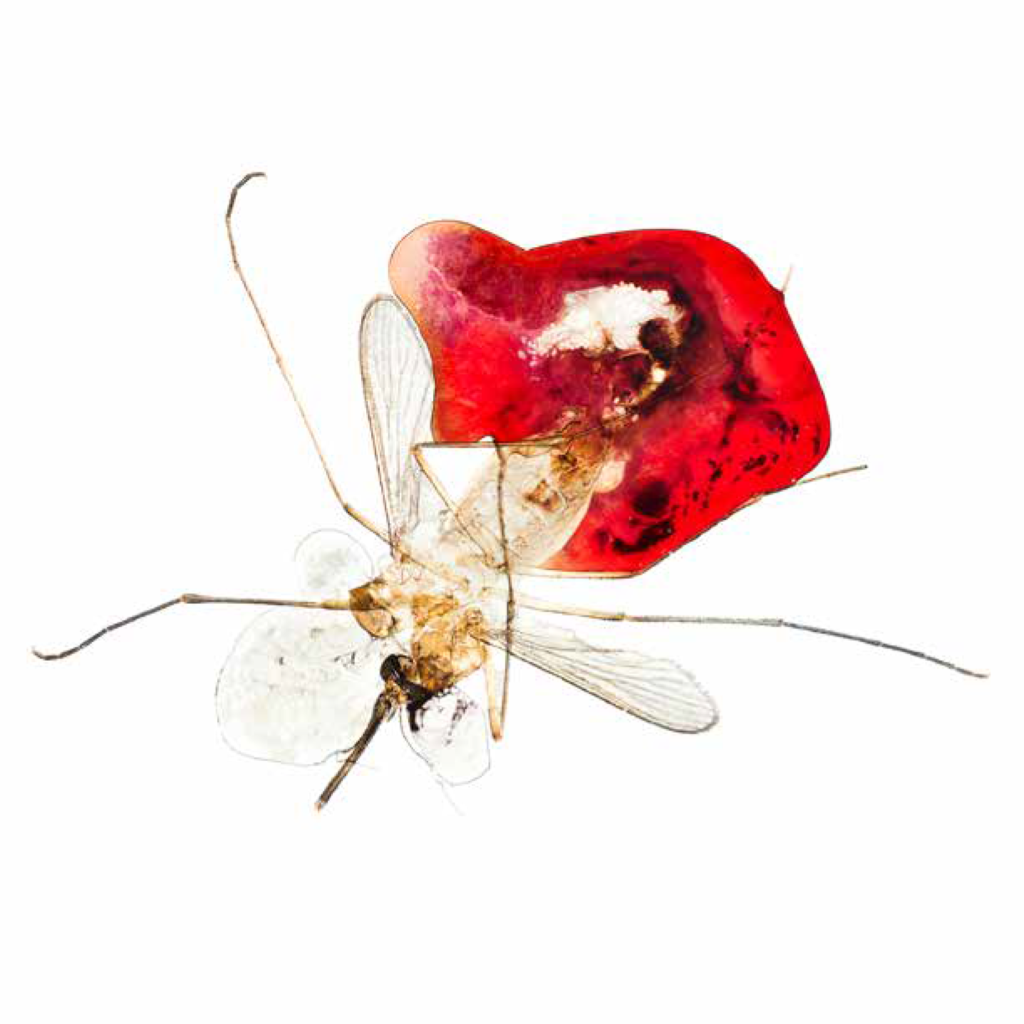
Blood Attract and Repel
Science Gallery Melbourne, Australia
August to September 2017
Science Gallery Melbourne is a dynamic new gallery at The University of Melbourne that will engage young adults through the intersections of art and science. The gallery will open in 2020 as part of an exciting innovation precinct at the heart of Melbourne. In the lead-up to the opening, Science Gallery Melbourne will host a diverse program of pop-up exhibitions, performances, events, and workshops in locations around The University of Melbourne Campus and within central Melbourne. Blood: Attract & Repel is Science Gallery Melbourne’s inaugural pop-up exhibition program.
The alluring mystery of blood has fascinated scientists and artists for centuries. From biological fluid to artistic medium, Blood: Attract & Repel was a powerful collision of arts and science that took you on a journey of scientific discovery, social taboo, and self-identity.
Part exhibition, part experiment, the season was curated for the curious and was definitely not for the faint-hearted.
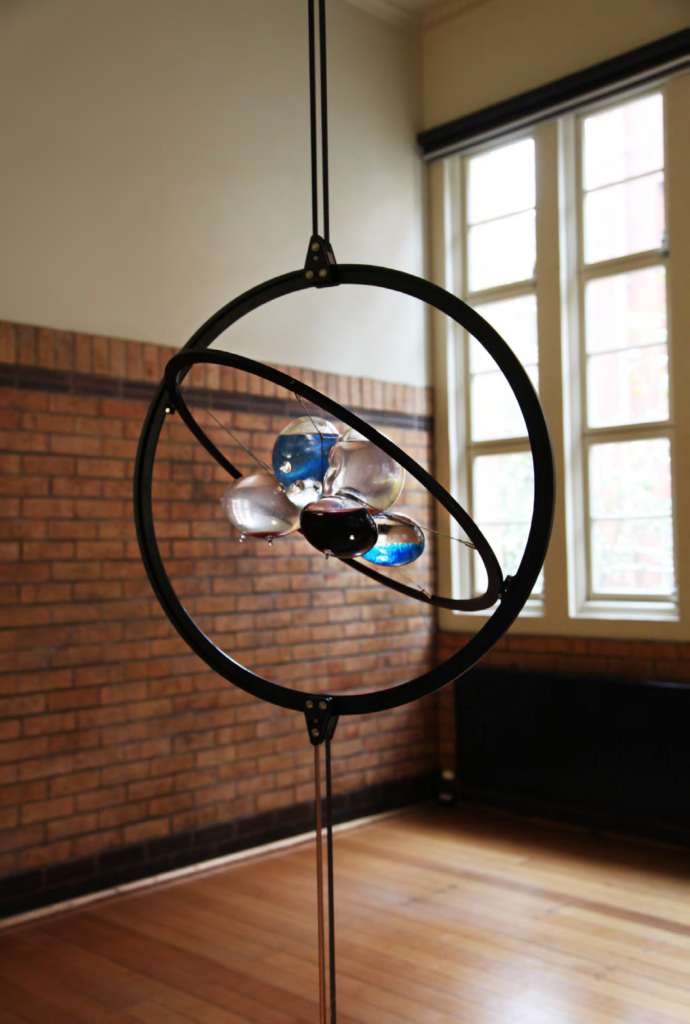
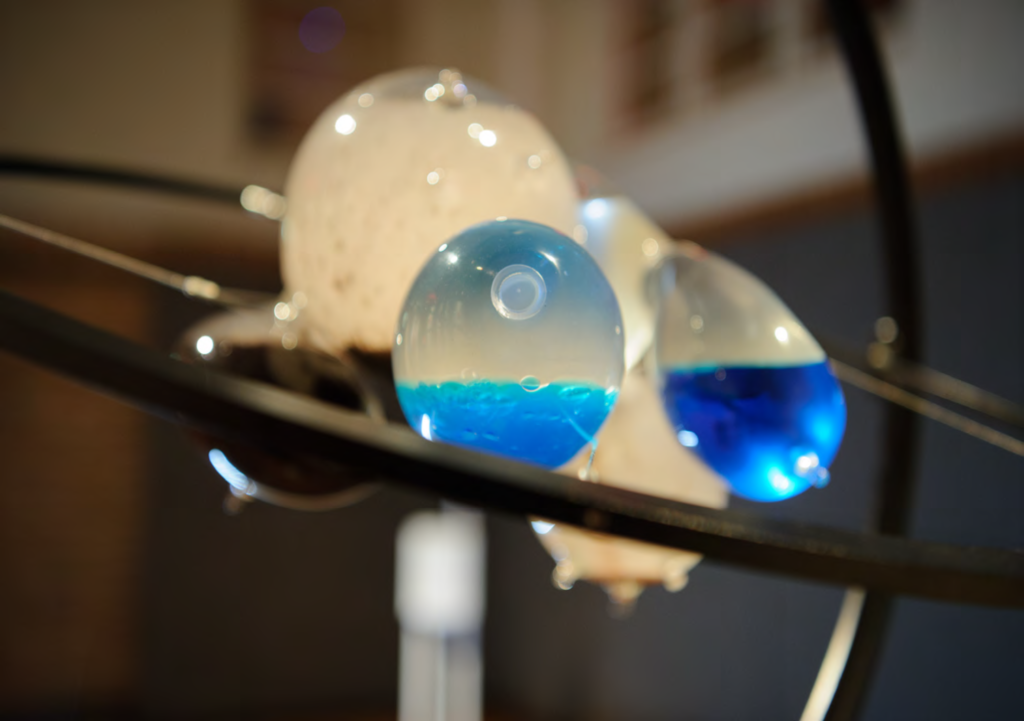
Blood Works of Tobias Klein Vector Leung and Jane Prophet were exhibited in the exhibtion.
Blood Works is a biologically inspired, transparent kinetic sculpture filled with blue and red liquids contained in interlocking glass-blown structures supported by a gyroscope-like framework. The liquids move as the sculpture shifts and spins. The artwork considers the properties and qualities of blood in different species, including fluidity, coagulation, metal content and closed cardiovascular systems. The conflation of life with the constant movement of blood became a key design criteria as organic 3D forms were developed with chambers and vascular-like structures to contain moving fluids.
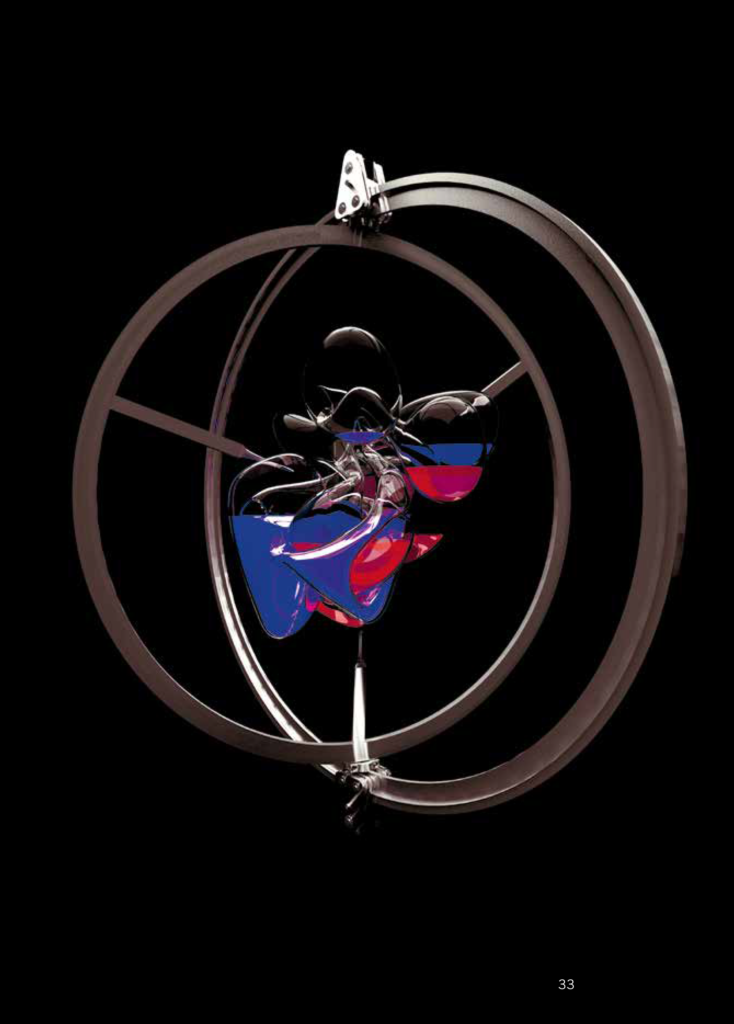
Some species have blue blood, such as the horseshoe crab, which is a result of the copper-rich protein hemocyanin. Humans and many other animals have red blood due to hemoglobin, an iron-containing protein that transports oxygen and turns blood red. Liquids based on copper and iron represent these different blood types, each partnered with a clear liquid to reveal the dynamic movement of liquids in the chambers.
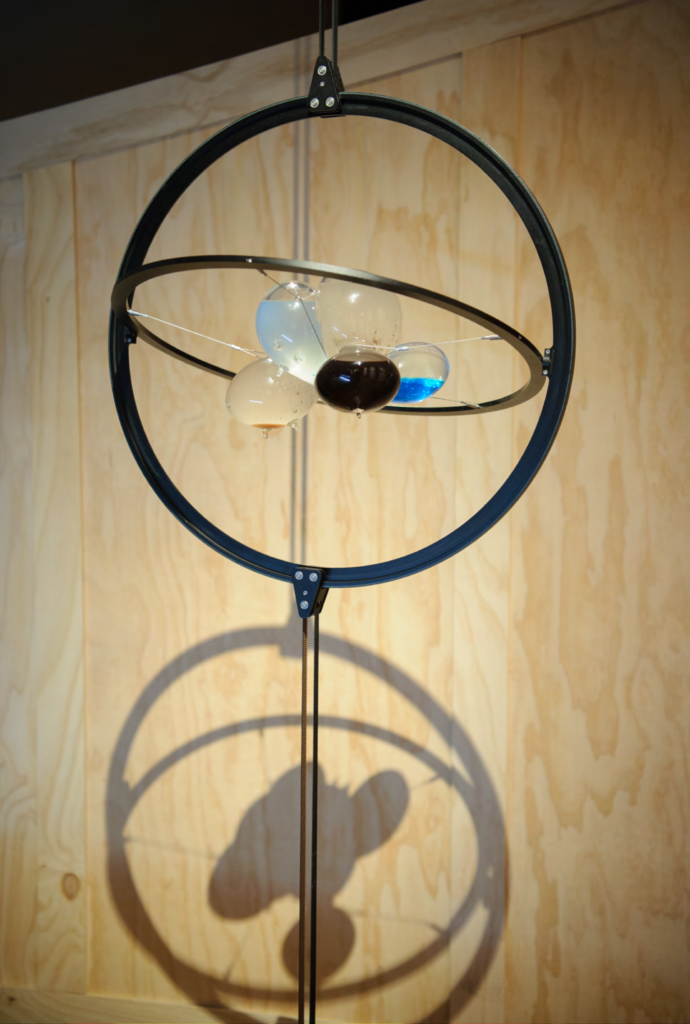
The blood flowing through the right and left sides of the heart do not mix, but stream and loop past each other, just like two currents in a body of water. As the heart develops before birth, in the ‘still water zone’ between the two currents, the septum dividing the two chambers forms. The movement of the blood shapes the heart, just as the looping heart redirects the flow of blood. Rather than the twisting muscular contraction of the human heart, gimbals and gyroscopic movement make this sculpture rotate and turn.
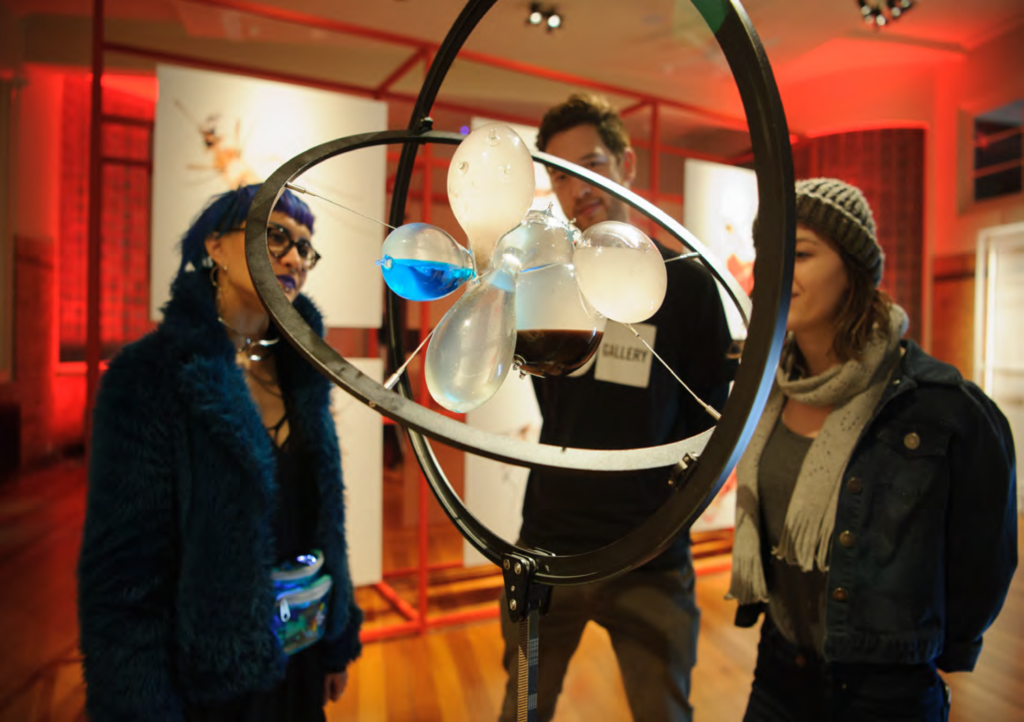
The exhibition opened from February 8th, 2017 to September 23rd, 2017, at the Science Gallery Melbourne.